

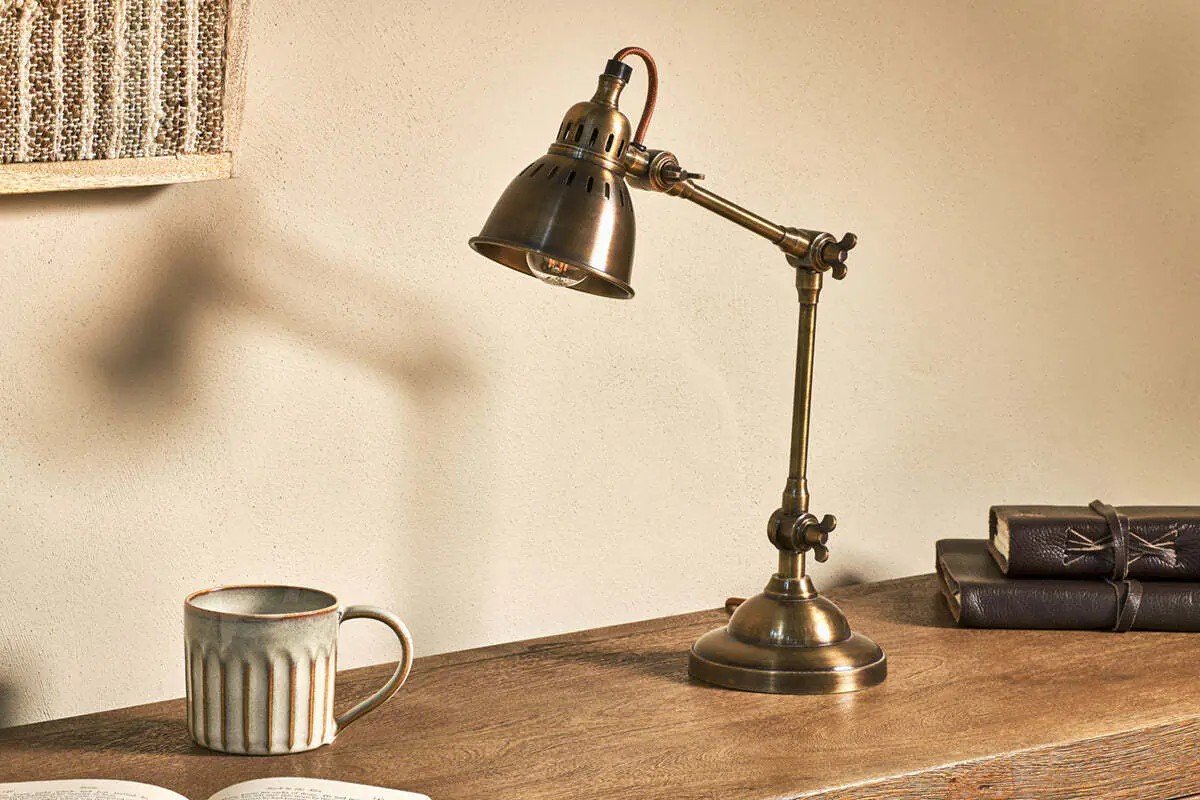
Home Office Lighting
Home Office Lighting
By far the easiest solution would be to have plenty of natural day light but this is not always possible. Brighter rooms are always a massive bonus, however, the position of the house can also have an impact on some of the rooms:
Natural Day light types:
North facing rooms - are generally known to be the colder part of the house therefore, more consideration to lighting may need to be addressed. Although, minimal glare and shadows due to direct sunlight, the room could feel flat emotionally as well as cold, therefore, layered lighting would be best suited.
East facing rooms - usually brighter in the morning with little sun in the afternoon. Extra lighting would be needed in this room. A great room for early risers and morning productivity which produces much more focused work. However, this can also produce intense morning glare then feel underlit after lunch. Adjustable blinds for morning control and task lighting for afternoons would need to be considered.
South facing rooms - they would be warm and light for most of the day, and this would be a lovely room. The brightest orientation overall and receives sun most of the day creating warm light, however, contrast and strong shadows as well as causing glare on screens and perhaps overwhelming in the summer months. This may suit a creative studio with high-energy work and full of plants.
West facing rooms - another lovely room due to it being warm, especially at the hottest part of the day, but be careful due to plenty of glare or materials fading. Dim in the mornings but warmest sunset tones for the afternoon and evenings creating dramatic shadows. The challenges would be a heat build up and hard for screen work without shading.
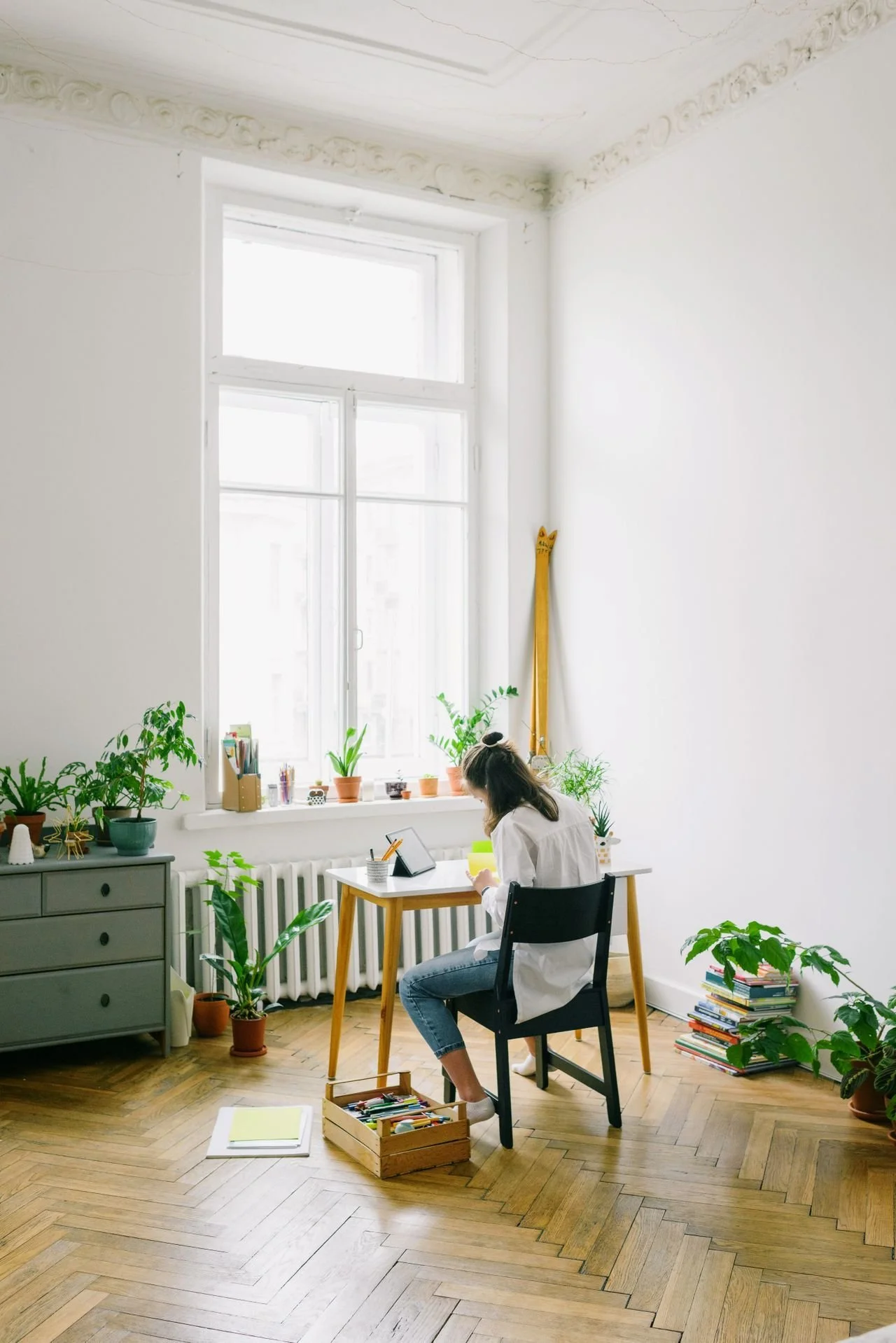
Good daylighting is one of the most valuable design tools in a home office, helping a space feel brighter, calmer and more connected to the outdoors throughout the working day.
Here are some easy ways to increase natural light throughout your workspace:
Use glass furniture to bounce the light and use mirrors to sit opposite or adjacent to a window to reflect and spread light deeper into the room
Choose satin or eggshell paint finishes in darker spaces, as they softly reflect more daylight than ultra-matt walls
Use light coloured soft furnishings for curtains and flooring or sheer voiles to allow the light into the room while still giving you the privacy. Lined curtains or wooden blinds can be used to control the light throughout the day
Avoid overly glossy screens, desks or flooring finishes in bright south, or west-facing rooms, as reflections can increase visual fatigue
Consider ceiling colour carefully as a pale ceiling reflects a significant amount of daylight back into the room and is often overlooked
Cut back all garden shrubs & climbers obstructing or blocking out natural day light from entering the room
Clean all windows regularly inside and out, as dirt and dust can significantly reduce the amount of natural daylight entering a room
In open-plan spaces, use lighter coloured cabinetry and shelving near windows to prevent the room feeling visually heavy or light-blocking
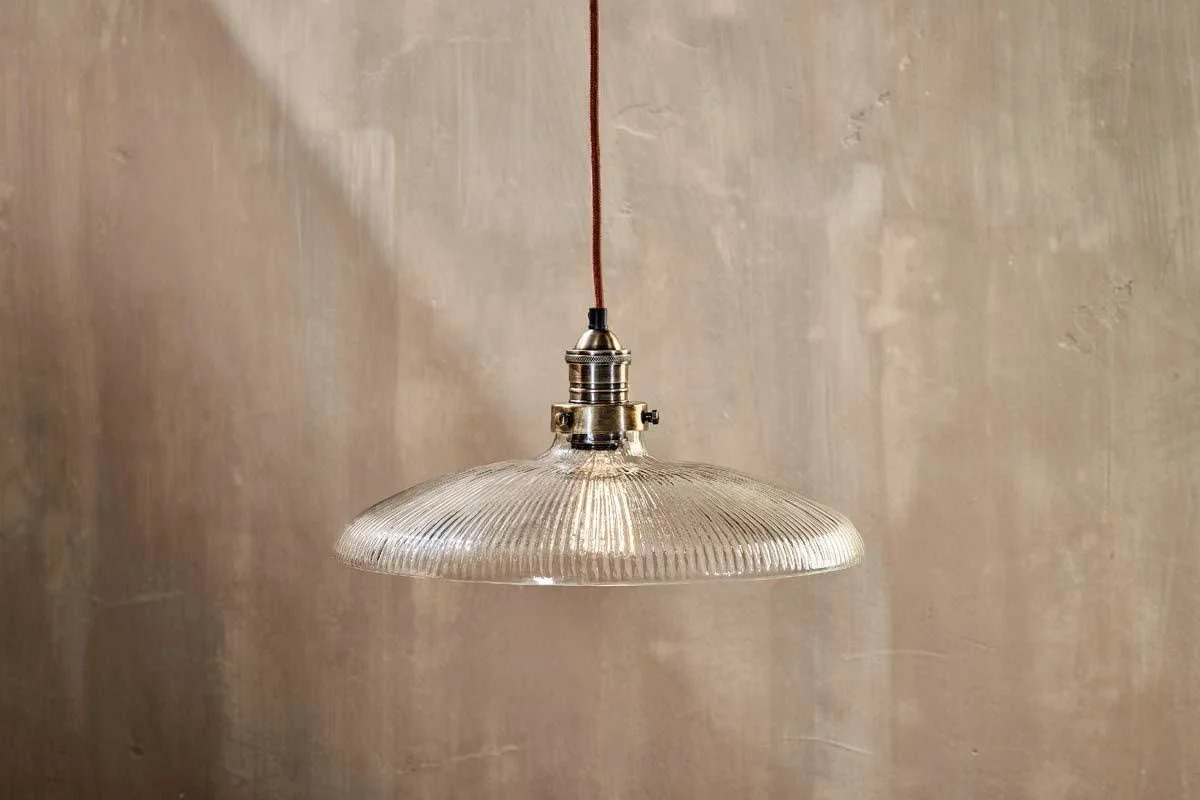
Please click on the image to view product
Ambient Lighting
This is the overall illumination typically created by:
Recessed downlights
Cove lighting
Wall sconces (when used to wash walls with light)
For a home office, ambient lighting should still be the foundation, but task lighting becomes much more important than it would be in, say, a living room.
A good home office typically uses both.
Ambient lighting (60-80%) provides comfortable, even illumination throughout the room. this is usually from ceiling lights, recessed downlights, or an indirect ceiling fixture. It reduces eye strain by preventing a stark contrast between your desk and the rest of the room.
Task lighting (20-40%) focuses light exactly where you need it, such as a desk lamp for reading, writing, or keyboard work. It lets you increase brightness at your workspace without making the entire room excessively bright.
Task Lighting Guide
Task lighting provides focused illumination for activities such as reading, working at a computer, sewing, drawing, cooking and hobbies. Unlike general room lighting, it directs light exactly where it’s needed, improving visibility while helping to reduce shadows, glare and eye strain.
Tips for Choosing the Right Task Lighting
Choose the right brightness. Rather than focusing on wattage, look at lumens. For most reading and desk tasks, aim for around 400-800 lumens. More detailed activities, such as sewing or craft work, may benefit from a brighter or dimmable light.
Create comfortable contrast. Your task light should be brighter than the surrounding room lighting, but not so bright that it causes glare. A balanced lighting scheme is more comfortable for your eyes.
Select an adjustable lamp. Clip-on, desk and flexible-arm lamps allow you to direct light exactly where you need it, making them ideal for home offices, reading nooks, bedside tables and hobby areas.
Position your light correctly. Place the light above or slightly to one side of your work to minimise shadows. If you’re right-handed, position the light on your left; if you’re left-handed, position it on your right. Adjust the height and angle to suit the task for greater comfort.
Why not rely on just a desk lamp?
If your desk is brightly lit but the rest of the room is dark, your eyes constantly adjust between the bright work surface and the darker surroundings. this can lead to discomfort and fatigue over long periods.
Rule of thumb
Ambient lighting lets you use the room comfortably
Task lighting lets you work comfortably
Neither should completely replace the other. Even in a workspace where task lighting is critical, good ambient lighting remains essential for visual comfort and an effective overall lighting design.
Did you know?
Lumens measure brightness, while watts measure energy use. When choosing modern LED lighting, always compare lumens rather than watts to find the right level of light.